
SimChat combines instant automated feedback with optional educator review, allowing learners to practise independently while educators can review transcripts and support learning as needed.
Create a free SimChat account to see how feedback works in SimChat.
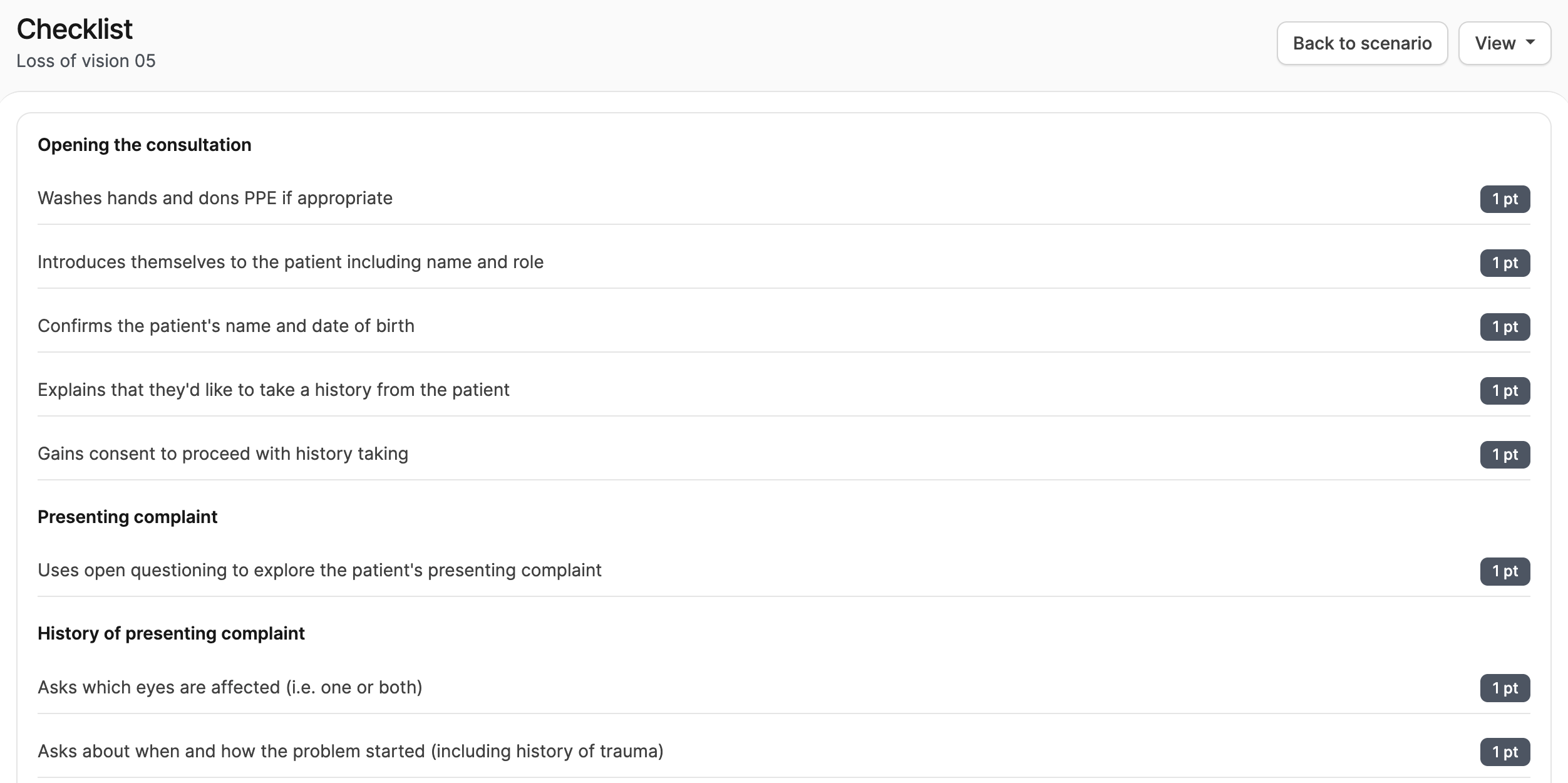
Checklist-based feedback built into every scenario
Each SimChat scenario includes a pre-defined checklist written by educators or scenario authors. The checklist outlines what a learner should achieve during the interaction.
This gives learners a consistent way to review what happened in the scenario and provides educators with a shared framework for feedback.
For example, checklist items often focus on whether the learner:
- Asked key questions
- Explored relevant red flags
- Explained options and next steps
- Checked understanding and safety netted
This helps learners link feedback to specific actions they can practise.
Instant feedback
After completing a scenario, learners can mark themselves against the checklist by comparing their transcript to the checklist items.
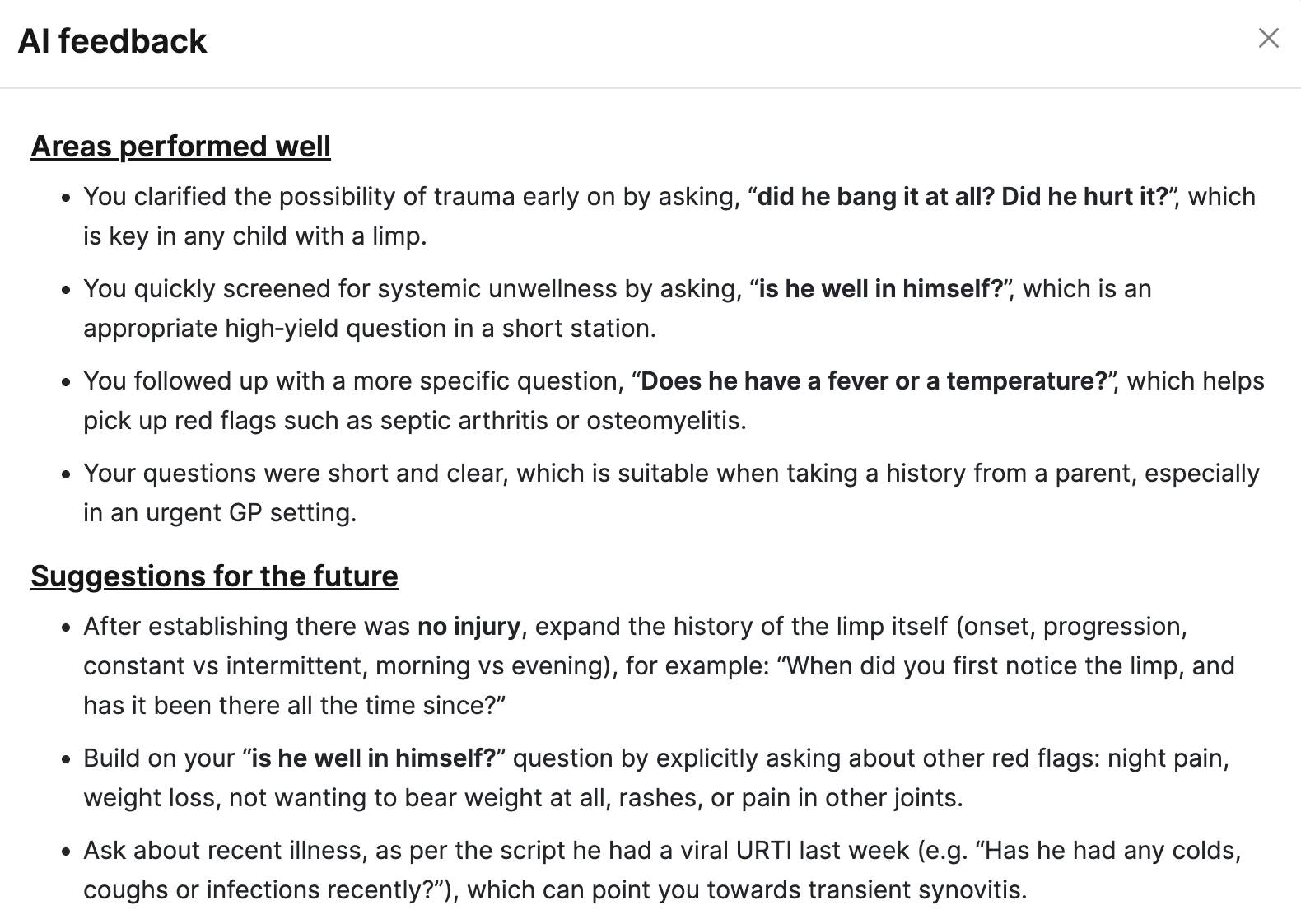
Learners can also choose automated checklist marking, powered by AI. SimChat can assess the transcript against checklist items and generate an auto-marked checklist immediately after completion.
Learners can request optional automated written feedback after completing a scenario. This feedback highlights strengths and specific areas for improvement next time. Organisations and educators can customise how the AI-powered feedback behaves to match their approach.
Faculty review and human feedback when needed
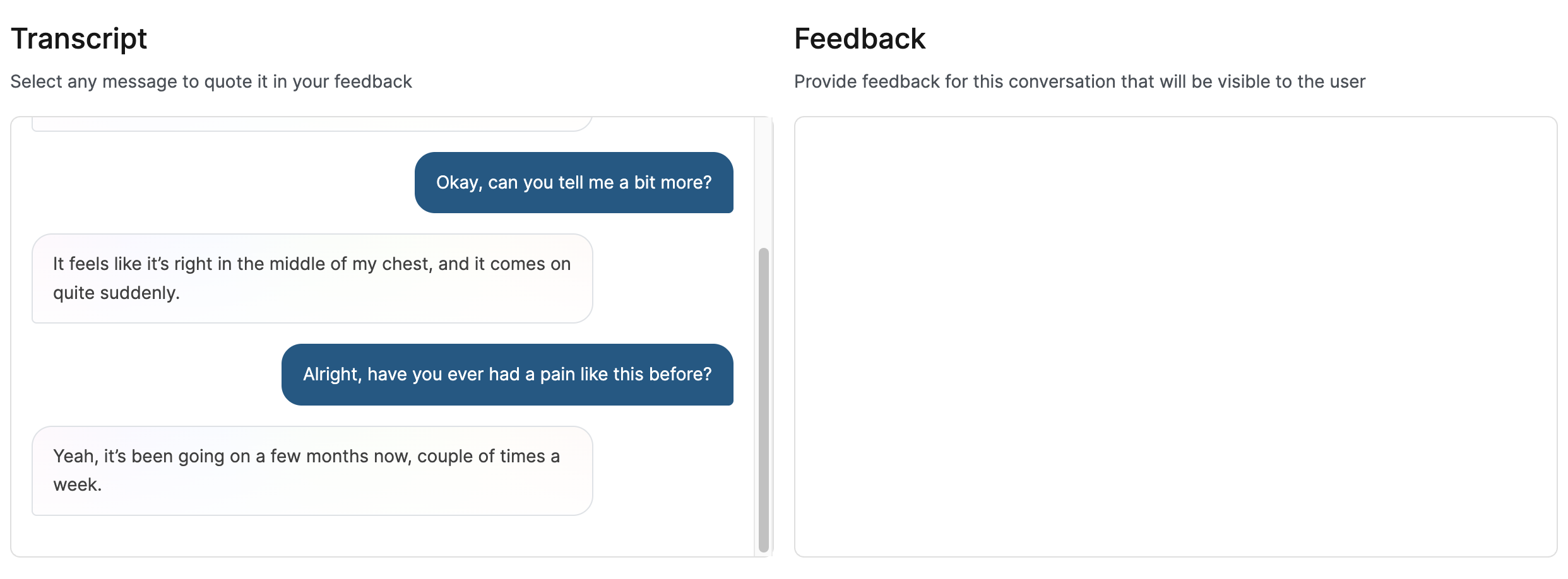
Organisation administrators and faculty can view learner session records, including transcripts and checklist results.
If needed, faculty can review a learner's session and leave additional written feedback. This provides a human review option for cases where judgement and context matter, for example quality assurance, targeted support or reviewing selected sessions more closely.
Sign up for a free SimChat account and request a demo to see how feedback can support consistent learner improvement across cohorts.